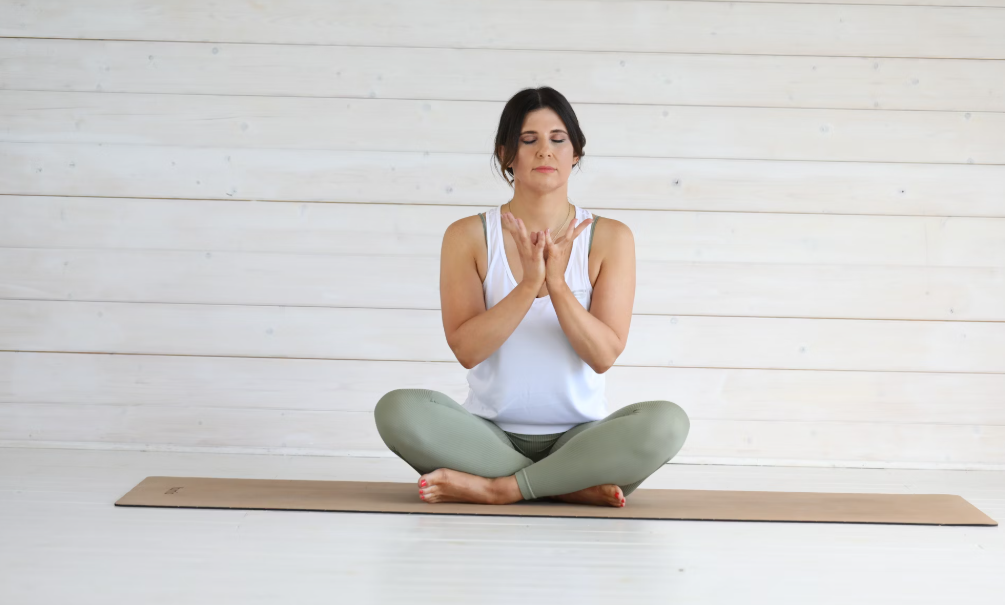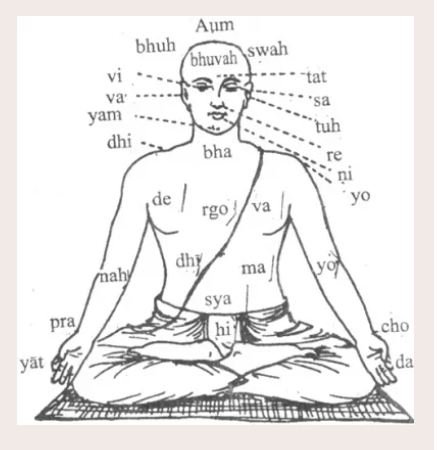

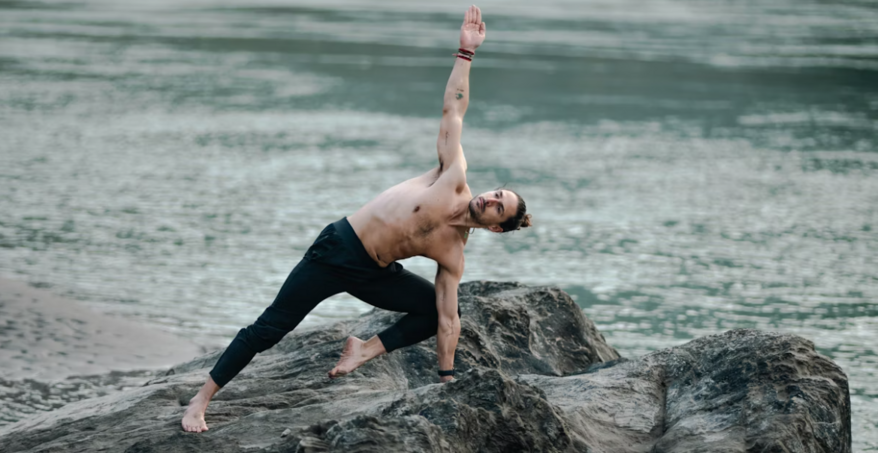
Padmasana, or Lotus Pose, is a cross-legged yoga posture that helps deepen meditation by calming the mind and alleviating many physical ailments. Regular practice of the Lotus yoga posture supports the practitioner’s overall blossoming, similar to the lotus flower — from which the name Padmasana originates. In Chinese and Tibetan Buddhism, the Lotus Pose is also known as the Vajra Position.
How to Perform the Lotus Yoga Pose (Padmasana)
Sit on the ground or on your yoga mat with crossed legs and a straight spine.
Bend your right leg at the knee and place the foot on your left thigh. Ensure the sole is facing upward and the heel is close to the abdomen.
Now do the same with the other leg.
Once both legs are crossed with the feet placed on the opposite thighs, place your hands on your knees in a mudra position.
Keep your head and spine upright.
Continue taking gentle, deep inhalations and exhalations while in the yoga pose.
Mudras While Practicing the Lotus Yoga Pose (Padmasana)
Mudras stimulate the flow of energy in the body and have a remarkable effect when practiced in the Padmasana yoga position. Mudras differ from one another, as do their effects on the body and mind. While performing the Lotus Pose (Padmasana), you can deepen your meditation by incorporating Chin Mudra, Chinmaya Mudra, Adi Mudra, or Brahma Mudra. Breathe for a few minutes while in the mudra position and observe the energy flow in the body.
Lotus Yoga Pose (Padmasana) for Beginners
If you have difficulty crossing your legs and sitting in Padmasana, you may initially try Ardha-Padmasana (Half Lotus Pose) by training each leg to rest on the opposite thigh. Continue to practice the posture until you feel flexible enough to perform Padmasana successfully.
5 Benefits of the Lotus Yoga Pose (Padmasana)
Improves digestion
Relieves muscle tension and stabilizes blood pressure
Calms the mind
Supports childbirth in pregnant women
Reduces discomfort during the menstrual cycle in women
Contraindications for the Lotus Yoga Pose (Padmasana)
This pose is not recommended in the case of ankle or knee injuries. Practice the Lotus Pose only under the guidance of an experienced yoga teacher.
Preparatory Yoga Poses for Padmasana
As preparation for Padmasana, the following yoga poses can be performed: Butterfly Pose, One-Leg Forward Bend, and Half Spinal Twist.
Yoga Poses to Follow Padmasana
The Lotus Yoga Pose can be followed by Downward-Facing Dog Pose.
Important Disclaimer
Practicing yoga helps us develop our body and consciousness and provides many health benefits, but it is not a substitute for medicine. It is important to learn and practice yogic poses under the supervision of Art of Living teachers. In case of medical conditions, yoga poses should be practiced only after consulting a physician and a teacher from The Art of Living.
Find the nearest and most convenient Art of Living yoga course and center for you.