

What is Nadi Shodhan?
Nadi = subtle energy channels;
Shodhan = cleansing, purification;
Pranayama = breathing technique.
The nadis are subtle energy channels in the human body that may become blocked for various reasons. Nadi Shodhan Pranayama is a breathing technique that helps purify these blocked energy channels, thereby calming the mind. This technique is also known as Anulom Vilom Pranayama.
Causes of Blocked Nadis:
Nadis may become blocked due to stress
Toxins in the physical body can also lead to blockages
Physical or emotional trauma may block the nadis
Unhealthy lifestyle
What Happens When the Nadis Are Blocked?
Ida, Pingala, and Sushumna are the three most important nadis in the human body.
When the Ida nadi is not functioning properly or is blocked, a person may feel cold, depressed, mentally low, experience slow digestion, or a blocked left nostril.
On the other hand, improper functioning or blockage of the Pingala nadi may cause excessive heat, irritability, anger, itchiness, dry skin, dry throat, excessive appetite, heightened physical or sexual energy, and a blocked right nostril.
3 Reasons to Practice Nadi Shodhan Pranayama
Nadi Shodhan Pranayama helps calm the mind and prepares it for a meditative state.
Just a few minutes of practice a day helps keep the mind peaceful, happy, and in harmony.
It helps release accumulated tension and fatigue.
How to Practice Nadi Shodhan Pranayama (Alternate Nostril Breathing)
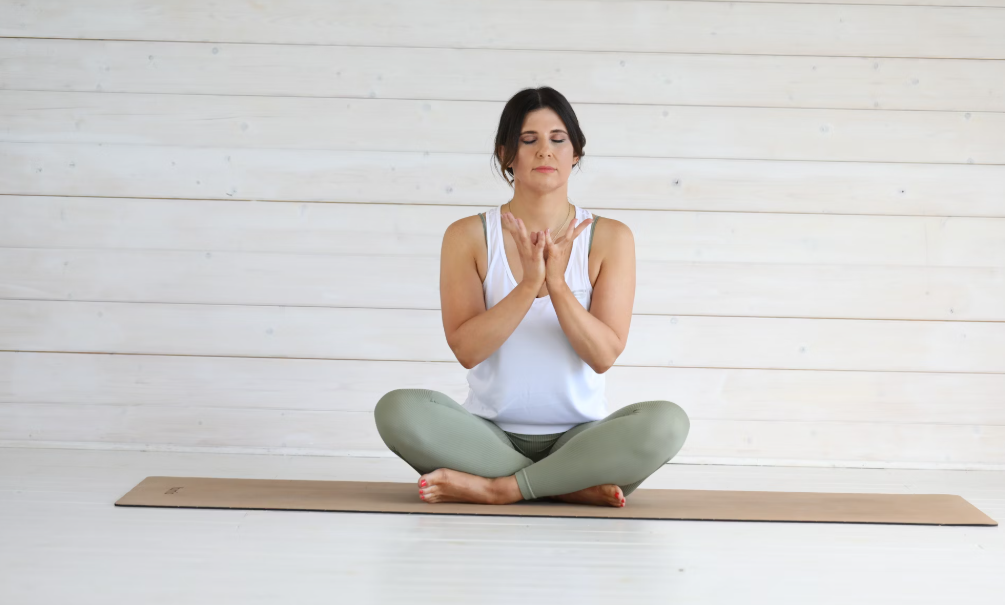
Sit comfortably with your spine upright and shoulders relaxed. Keep a soft, gentle smile on your face.
Place your left hand on your left knee, palm facing upward or in Chin Mudra (gently touching the tip of the thumb and index finger).
Place the tip of your index and middle fingers of your right hand between your eyebrows; rest the ring finger and little finger on the left nostril, and the thumb on the right nostril. You will use the ring finger and little finger to open/close the left nostril, and the thumb for the right nostril.
Press the thumb on the right nostril and gently exhale through the left nostril.
Now inhale through the left nostril, then gently press it with the ring finger and little finger.
Release the thumb from the right nostril and exhale through the right nostril.
Now inhale through the right nostril, then exhale through the left nostril—this completes one full round of Nadi Shodhan Pranayama.
Continue alternating nostrils as you breathe in and out.
Practice 9 rounds of alternate nostril breathing. After each exhalation, remember to inhale through the same nostril.
Keep your eyes closed throughout and take long, deep, smooth breaths without effort or tension.
What to Keep in Mind While Practicing Alternate Nostril Breathing:
Don’t force your breath; let it remain calm and natural.
Don’t breathe through your mouth and don’t make any sound while breathing.
Do not use Ujjayi breathing.
Place your fingers very gently on your forehead and nostrils—no pressure is necessary.
If you feel dull or start yawning after the practice, check your inhalation and exhalation duration. Your exhalation should be longer than your inhalation.
Tips for Practicing Nadi Shodhan Pranayama
It's beneficial to meditate for a few minutes after practicing Nadi Shodhan Pranayama.
This breathing technique can be incorporated as part of Padma Sadhana.
7 Benefits of Nadi Shodhan Pranayama (Alternate Nostril Breathing)
It is an excellent breathing technique for calming and focusing the mind.
Our mind tends to dwell nostalgically on the past and worry about the future. Nadi Shodhan brings the awareness back to the present moment.
It works therapeutically for most respiratory and circulatory issues.
It effectively releases accumulated stress from both the mind and body and helps you relax.
It harmonizes the left and right hemispheres of the brain, which relate to the logical and emotional aspects of our personality.
It purifies and balances the nadis—the subtle energy channels—thereby facilitating smooth and uninterrupted flow of prana (life force energy) throughout the body.
It helps maintain body temperature.
Contraindications
There are no contraindications. Once you learn this technique from a Sri Sri Yoga teacher, you can practice it 2–3 times a day.
Practicing yoga helps develop your body and mind and provides many health benefits. However, yoga is not a substitute for medicine. It’s important to learn and practice yoga postures under the supervision of a trained instructor.
Find a convenient Art of Living Yoga Course or Center near you.
In case of serious medical conditions, yoga poses should be practiced only after consulting a doctor and a Sri Sri Yoga instructor.