
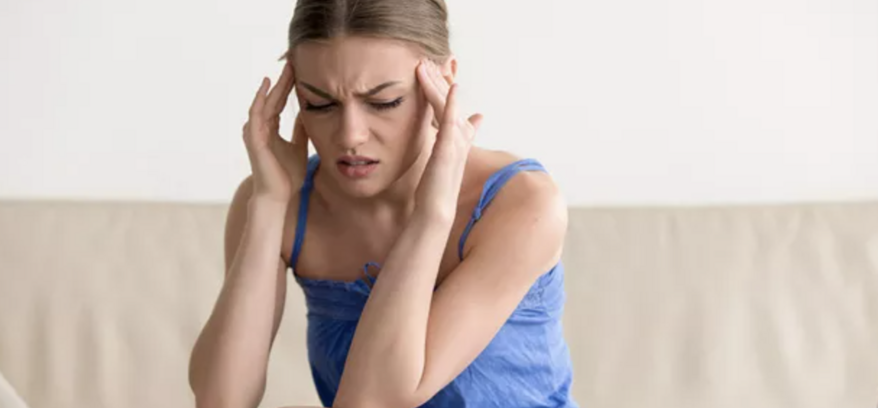
The first thing that is good to do when you are having a panic attack is to change the situation, the environment, and the overall state you are in.
Going outside and heading to the park is one idea, or going home, or somewhere where there is a familiar and safe face – if you are in company, that also helps.
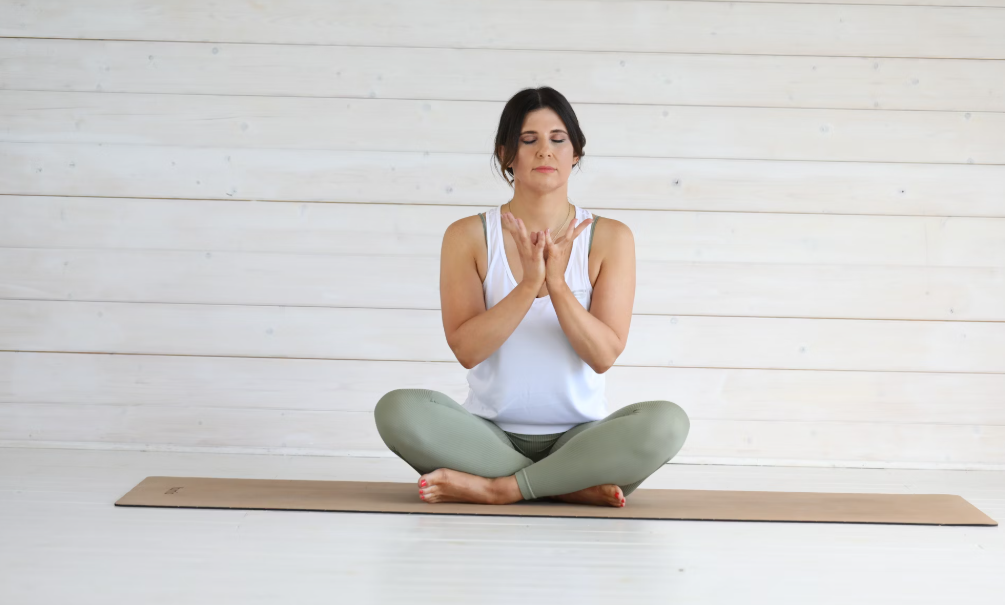
Then, try to concentrate on your breathing.
- Inhale and exhale in the present moment.
2. Then, silently repeat the words – “Inhale” (on each inhale) and “Exhale” (on each exhale).
3. Slightly open your mouth downward and exhale. You can include your shoulders as well.
On the inhale, lift them up, and on the exhale, lower them down.
4. Shake out your hands.
This already helps to release the tension in the muscles of your face, shoulders, and arms.
5. Then, mentally repeat a mantra or a “phrase with meaning” – for example:
“I am here, I am safe.”
“In this moment, I choose calm.”
(repeat 7 times mentally or aloud)
6. Not least – try to laugh.
With something funny, with your phone. As strange as it sounds – yes, cats help!
Play some puppies, chicks – anything that soothes your mind.
7. For a stronger approach to the problem, a set of breathing techniques is recommended for full and sustainable recovery from panic attacks.
Such a set is Sudarshan Kriya.
With these 7 steps, you can handle moments of tension, regardless of their intensity.
For those who are unfamiliar – panic attacks are short periods of intense fear and extreme worry, which include sweating, shaking, shortness of breath, heart palpitations. The feeling is described as if you are dying. This is due to the strong adrenaline rush and the combination of physiological responses to stress in the body.
It can pass within 10 minutes, especially if a technique is applied in time to calm down cortisol levels – the stress hormone.
Many of the symptoms people experience during a panic attack are due to improper breathing.
What happens is hyperventilation.
Contrary to popular belief, hyperventilation is not caused by lack of oxygen, but by exhaling too much carbon dioxide before it has a chance to be replenished in the body, and this causes the blood vessels to constrict.
The oxygen balance is disturbed, and blood pressure to the brain drops – causing chest pain or rapid heartbeat.
Slow, controlled breathing is one of the best ways to calm anxiety or panic attacks.
The key is to focus on proper exhalation.
Breathing is always in the present moment and is the connection between body and mind – you’ve noticed that every emotion has a certain breathing rhythm.
When we’re angry, we breathe in one way, when scared we breathe shallowly, when sad we exhale deeply – we sigh.
When we’re joyful, we emphasize the inhale more.
There is a connection between emotions and breathing. What we can do is use that connection to transform negative emotions into positive ones through our breath.
But to achieve that, we need more energy.
We have 4 sources of energy – sleep, food, breathing, and a calm, positive mind.
With the help of the Sudarshan Kriya technique, accumulated nervous tension can be easily regulated during a panic attack.
Numerous scientific studies show that regular practice can significantly ease the daily life of people with serious mental and physical disorders.
This is because it combines meditation, breathing, and movement in specific rhythms that influence the relaxation of the body and mind.
In such a study by Sameer A. Zope and Rakesh A. Zope, it is noted:
"Sudarshan Kriya stimulates the vagus nerve and causes numerous autonomic effects, including changes in heart rate, improved cognition in Alzheimer’s disease, improved gut function, etc. – inspiratory and end-expiratory holds create various stimuli from multiple visceral afferent, sensory receptors, and baroreceptors.
These likely affect a diverse group of fibers in the vagus nerves, which in turn cause physiological changes in organs, glands, and ascending fibers to thalamic generators, the limbic system, and cortical areas.
This may explain the speed at which effects like calmness and relaxation, combined with increased alertness and attention, are experienced in those practicing the technique. (For detailed neurophysiological pathway descriptions, see Brown and Gerbarg)."
It is a complex of different breathing and meditation techniques.
Therefore, to use it, a special training course must be completed, which takes only 3 days of 2 hours each, and after that, a person can practice what they’ve learned alone in situations of panic attacks, depression, stress, and anxiety.
Proof of this are the testimonials of people with various conditions who have completed the Breathing and Meditation Course.
“More than 15 years ago I had my first panic attack – when entering closed spaces I couldn’t breathe, felt like I would faint, and had heart palpitations.
After years of fear and inner restlessness, and ignoring my body, I was diagnosed with Multiple Sclerosis.
At that moment, I encountered The Art of Living and took the course with the Sudarshan Kriya breathing-meditation technique.
Actually, during panic attacks, you can’t breathe – and Sudarshan Kriya is the key to overcoming the problem, because it involves rhythmic and deep breathing, through which we can control our mind.
In reality, this technique helped me free myself from panic attacks and manage multiple sclerosis.
– Zdravka Nikolova”
To enhance the effect of any of the techniques, it is recommended – due to the nervous system fatigue caused by daily stress – to get good sleep.
Regular physical activity like yoga, tai chi, dancing, swimming – or even just walking outdoors – is also a key element in overcoming panic states.
Reducing caffeine, cigarettes, and alcohol is crucial, as is changing dietary habits.
It is essential for people experiencing such states to turn inward and understand that self-love is most important.
In Bulgaria, Sudarshan Kriya is currently taught by Art of Living instructors.
To get a glimpse of it, you can start with a free webinar – where you’ll receive basic techniques to manage anxiety.
And to learn the full practice, you can register online or in person for the Breathing and Meditation Techniques Course.